How to Prepare Your Home for a Natural Disaster: A Checklist for Every Risk
Most disaster prep follows the same core steps. What changes is how much warning you get, what your insurance covers, and what you should document first. This guide covers the shared steps and points you to a detailed guide for each risk.
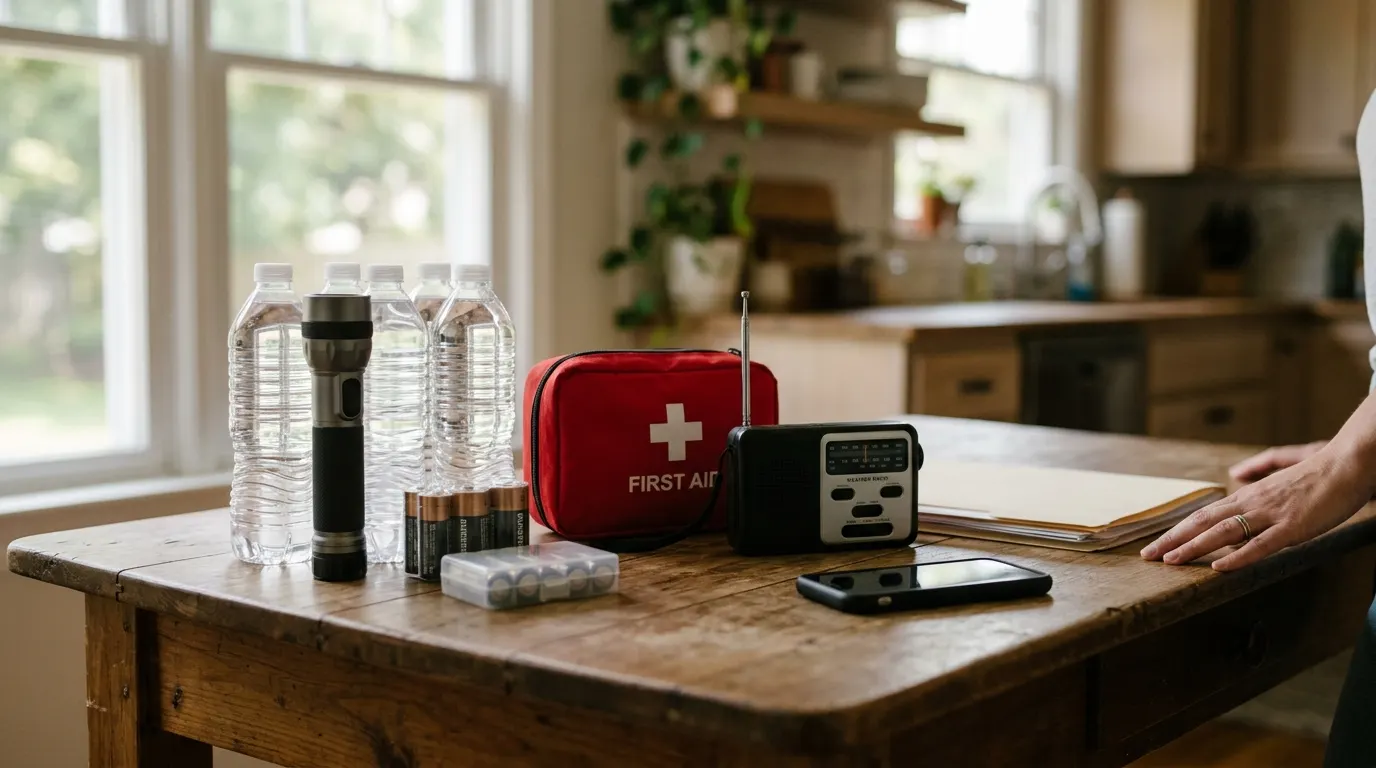
Disaster prep sounds like a huge project, but it breaks down into a handful of jobs you can finish over a few weekends: a plan, a kit, a safe place for your papers, a clear look at your insurance, and a record of what you own.
What are the steps to prepare your home for a disaster?
Learn which disasters are likely where you live, make a household plan, sign up for local alerts, build a supply kit, protect your documents, review your insurance, and record what you own. Then practice the plan once or twice a year so it holds up when you need it.
In order:
- Learn your risks. Look up the hazards for your county, including whether your home sits in a flood zone, an evacuation zone, or a wildfire area.
- Make a household plan. Pick a safe spot inside the home for storms, a meeting place outside for fires, and an out-of-area contact everyone can check in with if local phone lines are jammed.
- Sign up for alerts. Turn on emergency alerts on every phone, register for your county's alert system, and keep a battery or hand-crank weather radio as a backup.
- Build your kits. One larger kit at home, one go bag per person, and a small kit in the car.
- Protect your documents. Originals in a waterproof, fire-resistant container, copies in the cloud.
- Review your insurance. Read your declarations page and note what's excluded, what your deductibles are, and whether you need flood or earthquake coverage.
- Record what you own. Photograph your home room by room and keep the record off-site. More on this below.
- Prep the house. Test smoke alarms, learn where the water, gas, and electric shutoffs are, secure heavy furniture, and clear gutters and drains.
- Practice. Walk through the plan with everyone in the house, including kids, once or twice a year.
Which disasters are you most likely to face?
It depends on where you live, and most homes face more than one risk. House fires can happen anywhere, while floods, hurricanes, tornadoes, wildfires, and earthquakes cluster by region, so check your county or state emergency management site for the hazards in your area.
The table compares six common risks for U.S. homes. Warning times and coverage vary by location and policy, so treat it as a starting point.
| Disaster | Typical warning time | How coverage usually works | What to document first | Guide |
|---|---|---|---|---|
| House fire | None. You may have only a couple of minutes to get out. | Usually covered by homeowners and renters policies. | Every room, including soft goods and electronics that smoke can ruin. | Read guide |
| Wildfire | Hours to days in many cases, but sometimes only minutes. | Usually covered, though some high-risk areas face non-renewals. | Garage, sheds, decks, tools, and everything in the yard. | Read guide |
| Flood | Hours to days for river flooding; flash floods can come with little notice. | Usually excluded. Needs a separate flood policy, often with a 30-day wait. | The basement and lowest floor, organized by floor. | Read guide |
| Hurricane | Usually days of forecasts before landfall. | Wind usually covered, often with a hurricane deductible. Surge needs flood coverage. | Ground floor items and outdoor gear before you move them. | Read guide |
| Tornado | Often only minutes, sometimes none. | Usually covered as wind, sometimes with a separate wind or hail deductible. | The whole house, garage, and outdoor items, before storm season. | Read guide |
| Earthquake | None. | Usually excluded. Needs a separate policy or endorsement. | Breakables, electronics, art, and anything on a high shelf. | Read guide |
Preparedness guides by disaster
- How to prepare for a house fire: smoke alarms, an escape plan, and the first 24 hours after a fire.
- How to prepare for a wildfire: ember protection, the zones around your house, evacuation levels, and your go bag.
- How to prepare for a flood: flood coverage gaps and what to move upstairs first.
- How to prepare for a hurricane: a countdown from the start of the season to landfall, plus deductible math.
- How to prepare for a tornado: choosing a shelter and staging everything ahead of time.
- How to prepare for an earthquake: anchoring furniture and photographing it in the same pass, plus deductibles and the gas.
What disasters does homeowners insurance not cover?
Standard homeowners and renters policies usually exclude flood and earthquake damage, which need their own policy or endorsement. Fire and wind damage are usually covered, though wind, hurricane, and hail claims often come with a separate deductible that can be much higher than your regular one.
The gaps people run into most often look like this. Every policy is different, so your declarations page and your agent are the final word.
- Flood. Rising water from rain, rivers, or storm surge is usually excluded. Flood coverage comes from the National Flood Insurance Program or a private flood insurer, and a new policy often has a waiting period before it starts.
- Earthquake. Earth movement is usually excluded. You can typically add it as a separate policy or endorsement, and the deductible is often a percentage of your coverage.
- Sewer and drain backup. Often excluded unless you add a water backup endorsement.
- Wind and hurricane deductibles. Wind is usually covered, but many policies in storm-prone areas use a percentage deductible for wind, hail, or named storms.
- Additional living expenses. Most policies help pay for a place to stay while your home is repaired, but there's usually a limit in dollars or months.
While you're reading your policy, check how contents are valued. Some policies pay replacement cost and others pay actual cash value, which subtracts depreciation. Either way, you'll usually need to show what you owned, which is where the inventory comes in.
What should be in a disaster supply kit?
A basic kit covers water (a gallon per person per day), nonperishable food, a flashlight, a battery or hand-crank radio, extra batteries, a first aid kit, medications, phone chargers, cash, and copies of important documents. Keep a larger kit at home and a smaller go bag you can grab if you have to leave.
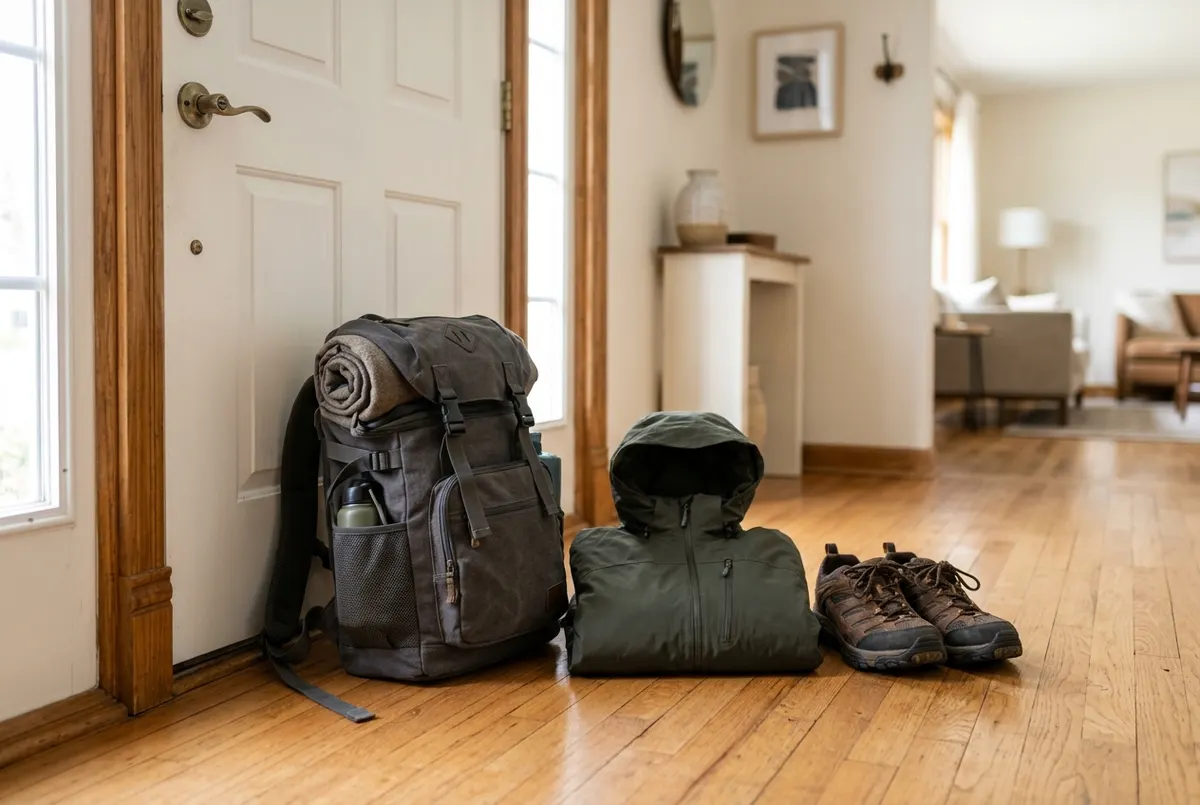
Home kit
- Water: one gallon per person per day, for as many days as you can store
- Nonperishable food and a manual can opener
- Flashlights, a battery or hand-crank radio, and extra batteries
- First aid kit, prescription medications, and glasses or contacts
- Power banks and charging cables
- Hygiene supplies, garbage bags, and moist towelettes
- Whistle, dust masks, and basic tools such as a wrench for utility shutoffs
- Supplies for babies, older relatives, and pets
Go bag (one per person)
- Water and snacks for a few days
- A change of clothes and sturdy shoes
- Medications and copies of prescriptions
- Cash in small bills
- Phone charger and a power bank
- Copies of IDs and insurance cards, or a way to reach them in the cloud
- A flashlight and a small first aid kit
Store the home kit where you'd shelter, keep go bags near the door or in the car, and replace water, food, and batteries once a year.
Where should you keep important documents?
Keep the originals in a waterproof, fire-resistant container you can grab on the way out, and keep digital copies off-site in password-protected cloud storage. That way, losing the house doesn't mean losing the paperwork you need to recover.
The papers worth protecting usually include:
- Driver's licenses, passports, birth certificates, and Social Security cards
- Insurance policies, with policy numbers and your agent's contact information
- Deed, mortgage, or lease, plus vehicle titles and registrations
- Medical records, prescriptions, and vaccination records for people and pets
- Bank, credit card, and retirement account information
- Wills, powers of attorney, and other legal papers
- Receipts and appraisals for valuable items, plus your home inventory
A fire-resistant safe helps, but it only protects its contents for a limited time and temperature, and many aren't rated for flooding. Scanning everything and keeping a copy in the cloud means you can open it from a hotel room or a relative's couch.
The preparedness gaps that show up after a disaster
Plenty of people have water in the garage and a flashlight in the drawer. These are the things that tend to get missed:
- A record of their belongings. Kits and plans get you through the event itself. Recovery runs on paperwork, and the biggest piece of it is a list of what you owned, which is far easier to make while the house is still standing.
- Their actual deductibles. Percentage deductibles for wind, hurricanes, and earthquakes can run into the thousands of dollars. Knowing the number ahead of time helps you plan savings.
- The limit on living expenses. Repairs after a major disaster can take months. Check how long and how much your policy covers.
- Prescription refills. Pharmacies may be closed. Ask your doctor about keeping a small extra supply.
- An out-of-area contact. Long-distance calls and texts often get through when local lines are overloaded.
- The garage, shed, and storage unit. Tools, bikes, and seasonal gear add up fast and are easy to forget.
Why a home inventory matters for disaster recovery
Most large property claims include a step people don't see coming. Once the fire is out or the water has gone down, your insurer typically asks for an itemized list of everything damaged or destroyed, often as part of a form called a proof of loss. Every appliance, every piece of furniture, every coat in the closet, ideally with an age and a value.
Think of it as a memory test you didn't study for. Most of us remember the big things and forget the rest: the drawer of kitchen tools, the bins in the garage, the shoes, the linens. Items that never make the list usually don't get considered, and it's the small things that quietly add up.

What to capture
- Room by room: a wide photo of each wall, then close-ups of anything valuable.
- Inside closets, cabinets, and drawers: open them and photograph what's inside.
- Serial and model numbers: photograph the labels on electronics and appliances.
- Receipts and appraisals: especially for jewelry, art, instruments, and tools.
- Values: what you paid, or a rough replacement cost, with the most care on expensive items.
- The garage, attic, and outbuildings: the places people forget most often.
Keep it off-site, in the cloud
A binder of receipts in a kitchen drawer is exposed to the same fire or water as everything else. A digital home inventory stored in the cloud lives somewhere other than your house, so you can open it from any phone browser after you evacuate.
How StowFindSell helps
StowFindSell organizes your belongings by room and storage spot, so the list mirrors your house. On Home and Family Pro, AI Vision looks at each photo and suggests a name, category, and estimated value, so you're not typing everything by hand. AI values are estimates you can adjust. As you add receipts and serial numbers, each item climbs the Evidence Ladder from a D toward an A, which shows at a glance where your documentation is thin.
When it's time to file, Starter and up can export a Proof Pack, a PDF with photos, or a CSV with links to each photo, listing your items, values, and receipts for you to send to your adjuster yourself. Starter covers up to 500 items and 5 locations with barcode scanning, which is plenty for many apartments and smaller homes. Home and Family Pro remove those caps. CSV export is on every plan, so you can keep your own backup copy too. Your policy and your adjuster still decide what's covered, but you'll walk in prepared. For the full walkthrough, see our guide to a home inventory for insurance and the step-by-step guide on how to create a home inventory.
What to do first after a disaster
- Get safe and stay safe. Don't go back inside until officials say it's safe. Watch for downed power lines, gas smells, and standing water.
- Contact your insurer. Report the loss as soon as you can and write down your claim number and adjuster's name.
- Photograph everything before cleanup. Take wide shots and close-ups of the damage, including water lines and broken items.
- Prevent more damage if you can do it safely. Tarp a roof or board a window, and keep the receipts.
- Ask before you throw anything away. Your adjuster may want to see damaged items.
- Track your living expenses. Save receipts for hotels, meals, and other costs.
Already had a loss and never made an inventory? Your phone's photo library is the best place to start, and each guide above lists the records that help most for that disaster. Put every item you remember into one list as you go, and ask your adjuster early which format and timeline they expect. Renters can find more in our guide to a home inventory for renters.
Frequently asked questions
What is a home inventory for disaster recovery?
It's a record of what you own, with photos, descriptions, values, and receipts where you have them, stored somewhere a disaster can't reach. After a loss, it becomes the starting point for the itemized list your insurer usually asks for.
How often should I update my disaster plan and kit?
Review both at least once a year, and again whenever your household changes. Many people tie it to the start of storm or fire season and swap out expired food, water, medications, and batteries at the same time.
How much water should I store for an emergency?
A common guideline is one gallon per person per day. Plan for at least several days in a go bag, and many households keep up to two weeks of supplies at home.
How do I plan for someone with medical needs?
List their medications, doses, and doctors, and keep that list in the kit. If they rely on equipment that needs power or medicine that needs refrigeration, ask your utility whether it keeps a medical priority list, and decide ahead of time who will help them leave.
Why should I keep cash in my emergency kit?
Power outages can knock out card readers and ATMs for days. A small stash of small bills covers gas, food, and supplies until things come back online.
How do I include pets in a disaster plan?
Pack food, water, medications, vaccination records, a leash or carrier, and a recent photo of each pet. Find out ahead of time which shelters and hotels along your evacuation route accept animals.
Can I build a home inventory on my phone?
Yes. StowFindSell runs in your phone's browser and stores everything in the cloud, so you can photograph a room and add items as you walk through the house.
The memory test
Without records, you're listing hundreds of items from memory under stress. Whatever you forget is easy to leave off the claim.
The Proof Pack
With a catalog ready, you export one organized PDF with photos, or a CSV with links to each photo, plus values, receipts, and Evidence Ladder grades.
Check one big item off your preparedness list
Block out a couple of weekends for your home inventory, and whatever your area's risk, you'll have photos, values, and receipts ready to send.
Start your 30-day trial