How to Prepare Your Home for a Tornado, From Shelter to Insurance Claim
A hurricane gives you days. A tornado might give you minutes. Everything that keeps your family safe and your claim simple has to be staged before the sky turns green.
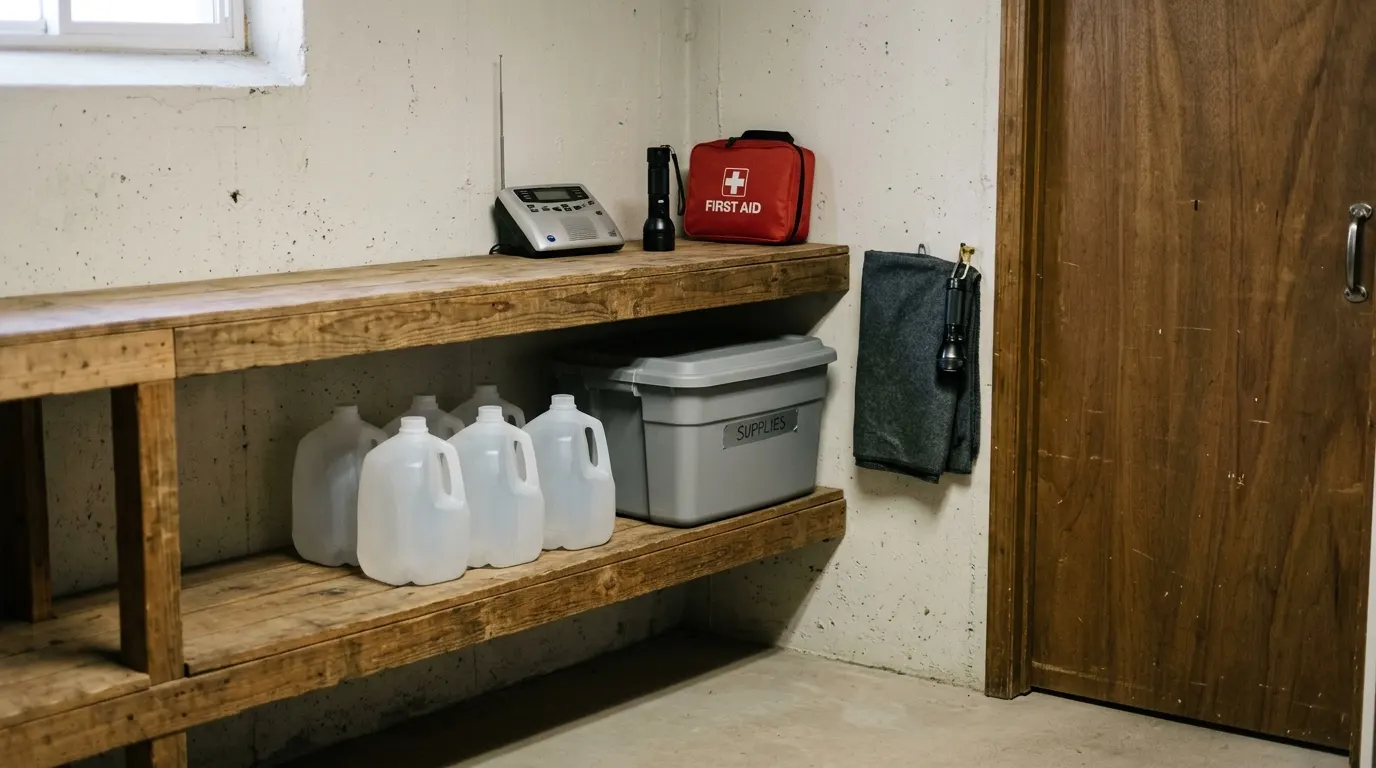
If you live in tornado country, you know the routine. The sirens go off, phones buzz, and everyone heads for the basement or the hallway closet. There's no time to look for batteries, find the dog's leash, or take photos of the living room. Whatever you haven't done before that moment probably won't get done.
So this guide is built around one idea: stage everything ahead of time. Pick and stock your shelter, prep the house and yard, and make a record of what you own, all on a calm weekend before storm season. Then when a warning comes, your only job is getting everyone to safety.
What's the difference between a tornado watch and a tornado warning?
A tornado watch means conditions are right for tornadoes to form, so review your plan and stay alert. A tornado warning means a tornado has been spotted or shows up on radar, so take shelter right away.
The gap between the two can be short. Tornadoes often give only minutes of warning, and sometimes they form too quickly for any warning at all. A watch is your cue to get ready: charge phones, put shoes by the bed, bring pets inside, and make sure everyone knows where to go. Don't count on hearing outdoor sirens from inside your house. Turn on emergency alerts on every phone and keep a battery-powered weather radio in your shelter spot, set to sound an alarm for your county.
When a warning is issued: your first few minutes
- Stop what you're doing. Don't wait to see the tornado.
- Grab shoes and phones on the way if they're within reach.
- Get everyone, including pets, to your shelter spot.
- Get under something sturdy if you can, and cover your head and neck.
- Put on helmets and pull blankets or a mattress over you for extra protection.
- Stay put until the warning expires or local officials say it's safe.
That list only works if the shoes, helmets, flashlight, and radio are already where you need them. Everything below is about making that true.
Where is the safest place to shelter during a tornado?
A safe room built to FEMA guidelines or a storm shelter built to the ICC 500 standard offers the best protection. Without one, go to a basement or a small, windowless interior room on the lowest floor, away from windows, doors, and outside walls.
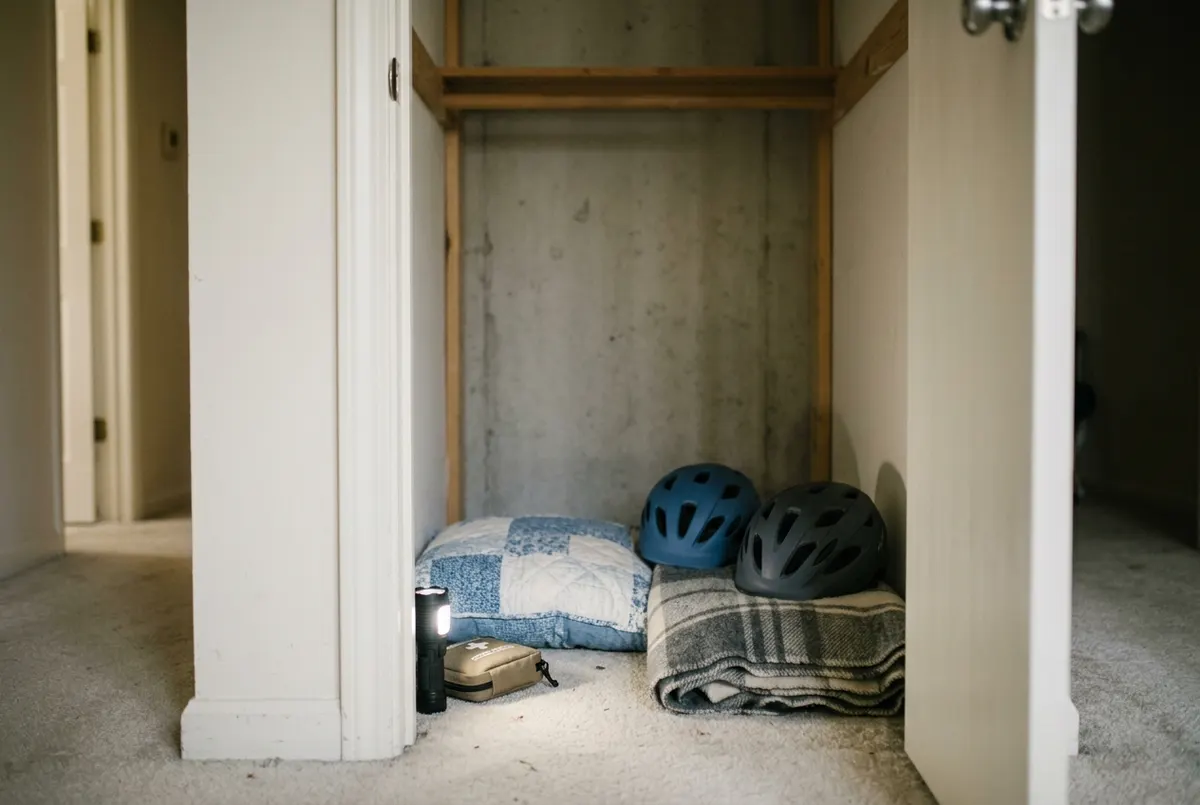
Houses with a basement
Choose a corner or area away from windows and from anything heavy on the floor above, like a piano or refrigerator. A workbench or sturdy table gives you something to get under. Keep the path clear so nobody trips in the dark.
Houses without a basement
Pick the smallest interior room on the lowest floor: a closet, a bathroom, or a hallway with no windows. More walls between you and the outside means more protection. If you're building or remodeling, ask about adding a safe room. It's one of the few ways to get near-absolute protection at home.
Mobile and manufactured homes
The National Weather Service says mobile homes aren't safe in a tornado, even when they're tied down. Decide now where you'll go instead: a sturdy neighbor's house, a community storm shelter, or another solid building nearby. Time the trip, because you need to leave as soon as a warning is issued, or sooner if a watch is in effect and storms are close.
Apartments and renters
Go to the lowest floor you can reach and an interior hallway or room away from windows. Ask your building manager whether there's a designated shelter area. If you rent a house, the same basement or interior room rules apply, and the prep below is just as useful for you as for an owner.
What goes in a tornado kit?
Pack water, nonperishable food, a flashlight, a weather radio with spare batteries, first aid supplies, medications, sturdy shoes, helmets, and copies of important documents. Keep it in your shelter spot so it's already there when the warning comes.
A tornado kit is small enough to fit in one plastic bin. Stage these items in your shelter spot:
- Water and a few nonperishable snacks
- Flashlights or headlamps, with extra batteries
- A battery or hand-crank weather radio
- A first aid kit and a few days of prescription medications
- Sturdy closed-toe shoes for everyone, so no one walks through glass and debris barefoot
- Bike or sports helmets to protect against head injuries
- A whistle to signal for help
- Phone power banks and charging cables
- Copies of IDs and insurance information, or digital copies you can open on your phone
- Leashes, a carrier, and a little food for pets
- Blankets, plus diapers or comfort items if you have small kids
Check the bin when the clocks change in spring and fall. Replace water and snacks, test the radio, and swap batteries.
Stage your home and yard before storm season
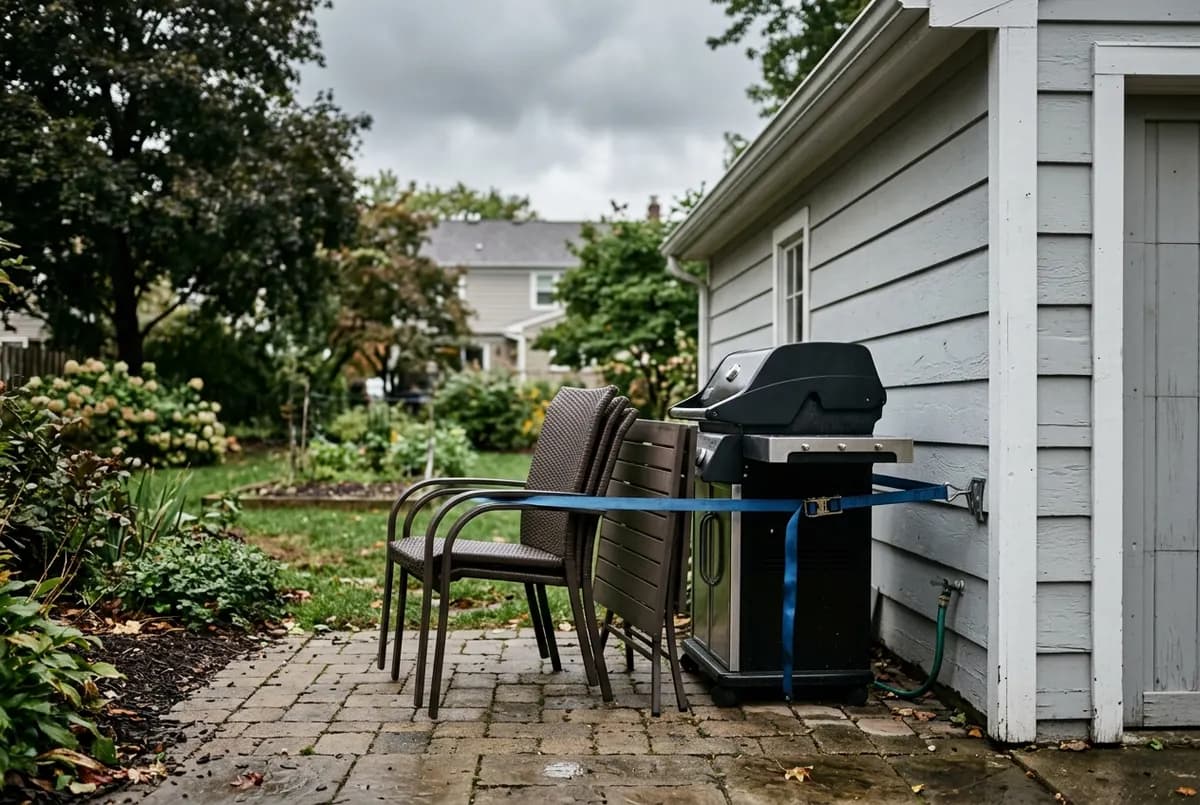
In a strong storm, almost anything outside can become a projectile. A few hours of yard work in early spring can mean less damage to your home and your neighbors'.
Outside
- Trim dead or overhanging branches and have weak trees checked by an arborist.
- Decide where patio furniture, grills, and trash cans go when storms are forecast, and practice the five-minute version.
- Anchor trampolines, playsets, and sheds if they aren't already.
- Clear gutters and downspouts so heavy rain can drain away from the foundation.
Inside
- Learn where your water, gas, and electric shutoffs are, and keep any tools you'd need nearby.
- Ask about a wind-rated garage door if yours is older, since garage doors are a common weak spot.
- Move heavy items off high shelves near your shelter spot.
- Keep shoes and a flashlight next to each bed for nighttime storms.
Drills
Practice getting to shelter at least once a year with everyone in the house. Time it. Try one drill at night with the lights off. Kids remember what they've practiced, and a drill is the fastest way to find a blocked path or a missing flashlight.
What tornado checklists usually leave out
- A record of what they own. Shelter and kit lists stop at the moment the storm passes. The claim starts right after, and a list of what was in the house is the one thing a tornado watch leaves no time to make.
- Photos that help identify scattered belongings. Tornadoes can carry furniture into a neighbor's yard and papers miles away. Clear photos make it easier to recognize your things in the debris.
- Their wind or hail deductible. If it's a percentage, the dollar amount can be a surprise.
- Night storms. Many plans assume you're awake. Weather radios with alarms and shoes by the bed fill that gap.
- The garage and shed. Mowers, power tools, and bikes are expensive and easy to forget on a claim.
How do I document my belongings before a tornado?
Walk through your home room by room with your phone, photographing each wall, the inside of closets and drawers, serial number labels, and receipts, then store the record in the cloud. Do it before storm season, because there's no time once a warning is issued.
Tornado damage tends to be total in some spots and partial in others, so cover the whole property. A weekend is usually enough for an average home if you take it one room at a time.
- Every room: furniture, electronics, appliances, rugs, lamps, and decor, with brands and model numbers where you can find them.
- Closets and drawers: clothing, shoes, linens, and kitchen tools. Open each one and take a photo.
- Serial numbers: photograph the labels on TVs, computers, appliances, and power tools.
- Receipts and values: the purchase price or a fair guess at replacing it, starting with the costliest pieces.
- Garage, sheds, and the yard: grills, patio sets, playsets, and trampolines are often the first things a storm takes.
- Valuables: jewelry, collectibles, and art, along with any appraisals.
When the warning sounds, the only job is getting to shelter. Documentation has to be done already.
A photo of each item, taken while it's intact, shows what you owned and what condition it was in.
Where StowFindSell fits
Electronics are the slowest part of a tornado inventory, since every TV, console, and laptop has a model number worth recording. StowFindSell is home inventory software with barcode and ISBN scanning on Starter and up: point your phone at the box or label and it fills in the product details, so a shelf of gear or books takes minutes. Add a photo, a value, and the serial number to each item, and the Evidence Ladder grades it so you can see which ones still need proof. Any value you enter yourself is only as good as your memory, so a receipt is the best backup for the big purchases.
Receipts in a filing cabinet and a laptop on the desk can disappear in the same storm. Your inventory lives in the cloud and opens in any phone browser, so you'll have it in the shelter, at a hotel, or at a relative's house. Filing day means one export: a Proof Pack, either as a PDF that includes the photos or as a CSV that links to them. Our page on home inventory for insurance explains what a Proof Pack includes, and how to create a home inventory walks through the method step by step.
Does homeowners insurance cover tornado damage?
Usually, yes. Most homeowners policies treat tornado damage as wind damage, though some carry a separate wind or hail deductible set as a percentage of your dwelling coverage, so check your declarations page.
A few details are worth confirming with your agent before storm season:
- Your wind or hail deductible. A 2% deductible on a home insured for $250,000 is $5,000 out of pocket before coverage starts.
- Flooding. If rising water floods your home during the storm, that damage usually falls under flood rules and needs its own flood policy.
- How contents are valued. Replacement cost pays to buy new. Actual cash value subtracts depreciation.
- Additional living expenses. Most policies help with hotel and meal costs while your home is repaired, up to a limit.
- Detached structures. Sheds, fences, and detached garages often have their own coverage limit.
Renters should know the landlord's policy covers the building, and your own belongings usually need renters insurance. For what to document in a rental, see home inventory for renters.
If a tornado already hit
- Check everyone for injuries and stay out of damaged buildings until officials say it's safe.
- Keep clear of downed power lines and leave right away if you smell gas.
- Photograph and video the damage before you move anything, as long as it's safe to do so.
- Call your insurer, report the claim, and write down your claim number.
- Make temporary repairs to prevent more damage, like a tarp over a hole, and save the receipts.
- Ask your adjuster before throwing damaged items away.
No inventory before the storm? Tornado damage leaves a trail you can use. Photograph anything of yours you find in the debris or a neighbor's yard, since a dented grill or a soaked sofa still proves you owned it. Product registrations and warranty accounts can fill in appliances and electronics, and store loyalty accounts often list what you bought. Ask each person in the house to list the rooms they know best, then combine everything in StowFindSell so the claim has one source. Report the claim quickly and ask your adjuster what proof they want for each kind of item.
The storms that drop tornadoes often bring torrential rain, and in much of the country tornado season overlaps with flash flooding. Wind and rising water are usually covered by different policies, so read how to prepare for a flood before spring, and use our disaster preparedness checklist to see how your other local risks compare. Hurricanes can spawn tornadoes too, which our hurricane countdown covers.
Frequently asked questions
How much warning do you usually get before a tornado?
Often only minutes, and sometimes none at all. That's why your shelter, kit, and records need to be ready before storm season starts.
Is a mobile home safe during a tornado?
No. The National Weather Service advises leaving a mobile or manufactured home for a sturdy building or a community storm shelter, even if the home is tied down.
Should I open windows before a tornado?
No. Opening windows doesn't protect your house and wastes time you need to get to shelter. Stay away from windows entirely.
Is a highway overpass a safe place to shelter?
No. Overpasses can funnel wind and debris, and the National Weather Service warns against using them. If you're caught in a car, try to reach a sturdy building.
What should I do if I'm outside when a tornado warning is issued?
Get inside a sturdy building if you can reach one. If there's no shelter nearby, lie flat in a low spot away from trees and cars, cover your head and neck, and watch for flooding.
Are cars covered by homeowners insurance after a tornado?
Usually not. Vehicle damage typically falls under the comprehensive part of an auto policy, so keep your car records with that insurer.
Can I get help paying for a tornado safe room?
Sometimes. Some states and local governments have offered safe room rebates or grants, often funded through FEMA hazard mitigation programs, so check with your state emergency management office before you build.
Get your inventory done before storm season
Spend one weekend documenting your home now, and you'll have a complete list in your pocket if a tornado ever comes through.
Start your 30-day trial